Why a Top Ghostwriter Chose Scribe for His Debut Novel
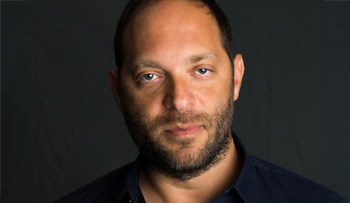
The Author
Adam Skolnick has spent about 20 years as a freelance journalist. His core habit is to over-research, let people talk at length, and record everything. That same instinct made him a natural ghostwriter: he sees his job as being an “open channel” so the author’s voice comes through first.Before this novel, he had already:
- Written a narrative nonfiction book for a major publisher (One Breath, about competitive freediving)
- Written guidebooks and long-form reporting
- Ghostwritten David Goggins’s books, including Can’t Hurt Me (2018) and the follow-up, helping turn Goggins’s spoken storytelling into book form
The Novel
The seed for his debut novel, American Tiger, came from a real assignment in 2005.A tiger escaped from a “Tiger King–type” couple in Simi Valley, a suburb of Los Angeles. The owners didn’t tell anyone. The cat was loose for weeks before Fish and Wildlife even knew it was out there. When the story broke and the tiger still hadn’t been found, Adam pitched LA Weekly, got the go-ahead, and spent a day embedded with game wardens as they searched. They didn’t find the cat that day, but the experience stuck with him.
Years later, he began shaping that memory into fiction. After about ten drafts, the story became:
- A novel about a game warden and his daughter
- The daughter is the first to see the tiger, but no one believes her because she exaggerates and has a wild imagination
- Over several days it becomes clear she may not be lying this time
- A tiger hunt in suburban LA that explores the wildness in nature, in communities, and in people
The Publishing Problem
Adam is represented by an agent at UTA. His agent brought in an outside editor who helped take the manuscript to another level. People at the agency were excited and optimistic.But when they submitted the book to major publishers, the response was consistent:
- They went out in multiple waves
- The big houses kept saying no
- Editors said they liked it, but didn’t know how to sell it
- The book crossed genres and didn’t fit a clear category
They were also in conversations with indie presses, but the advances on offer were in the range of $5,000–$15,000. For Adam, that money wouldn’t change his life, and trading away most of the royalties for that level of advance didn’t make sense.
At the same time, his regular journalism platforms were drying up. The New York Times sports desk shut down. Outside went through ownership changes and editor turnover. Assignments slowed or stopped. For more than a year, nothing seemed to be working.
He believed American Tiger was as good as anything he’d written. The market was not agreeing.
The Turning Point
In the middle of all this Adam talked to a friend about his frustrations. She told him: you’ll find a way to publish your novel as soon as you stop needing to be anointed as a novelist.That line clarified how much he was still seeking the symbolic stamp of a Big Five publisher. He had grown up loving books that came out of New York. His heroes moved between nonfiction and fiction. His agent repeatedly warned him that fiction is tough. He tried to write something bulletproof without worrying about category, but from the industry’s point of view that made the book harder to place.
Meanwhile, he was getting strong feedback from early readers who loved the novel. And he was seeing what felt like affirmations in the real world. One example: he had written a one-legged crow into American Tiger. After he and his wife April moved house, she spotted a one-legged crow on their block. Then it started appearing in their backyard, day after day, for over a year.
He was getting no after no from publishers, but yes after yes from readers and life. He started to think: maybe the book is sound, and the system is the problem.
At that point, he stopped caring about being “anointed” and started caring about giving the book a real chance with readers.
Why he Chose Scribe
Adam already knew Scribe from his work with David Goggins, even though he wasn’t part of the business-side discussions. He’d watched how Scribe handled editing and production at a high level outside the traditional system.He also saw the broader landscape shifting:
- When Can’t Hurt Me came out, it was basically only in Amazon’s physical stores and Barnes & Noble
- Now, more independent bookstores are opening shelf space for independently and hybrid-published authors, especially local ones
- Bookstores like Parnassus in Nashville and Vroman’s in LA are leaning in
- Politics & Prose has launched its own indie press
- Simon & Schuster has launched a Scribe-style competitor
With that in mind, he decided:
- Not to accept a small advance and give away most of the upside
- Not to keep waiting for New York to say yes
- To publish American Tiger with Scribe, with a professional team but without losing control
Outcome and Takeaway
By choosing Scribe, Adam:- Kept American Tiger exactly as he envisioned it, without forcing it into a neat genre box
- Avoided trading long-term royalties for a small advance
- Gave his novel a professional publishing path that matched the quality of the manuscript
- Stepped out of dependence on gatekeeper validation
Ready to Write Your Book?
Scribe has helped 2,000+ authors turn their ideas into published books. Schedule a free consult to get started.
Schedule a Consult